Brought to you by

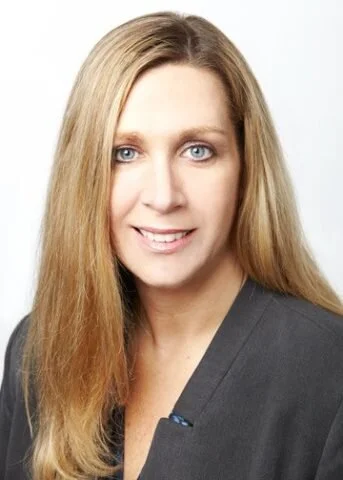
Jason talks to Christine Brunsden, CEO of Benefits2, a web-based application designed to help people and medical practitioners identify disabilities that qualify for the Disability Tax Credit. It also assists them by saving time and money while increasing the rate of success when applying for the Disability Tax Credit.
Resources Mentioned
Hosted on Acast. See acast.com/privacy for more information.
2:56 – Through her teenage years, Christine's daughter went downhill, and she ended up going through some really terrible stuff.
3:52 – Christine realized how hard it is for young people who are aging out of the system, they don't have the proper support.
9:41 – Christine shares an example of a woman who did her disability tax credit with Benefits 2 on January 31st.
11:09 – The hard part for everyone involved in tax refund is that nobody has ever taught anything about this in school.
12:02 – Christine explains how her platform helps people qualify for disability tax.
12:45 – The government tried to bring in the disability tax motors restrictions act and fix the fee at $100.
17:08 – Christine thought the disability tax credit promoters were really predatory in nature, taking that big percentage.
19:10 – Christine is a huge advocate for diversity, equity and inclusion, and he is also a huge advocate for people with disabilities.
24:18 – The Canada Caregiver credit, medical expenses, and disability supports deductions home buyer's amount.
25:09 – 60% of all people who have the disability tax credit are over the age of 55, and the RDSP is not even a benefit for that.
26:22 – It's not a disability tax credit. It's really an enabling for people with ordinary everyday impairment to their activities of daily living.
Speaker 1: Welcome to the Financial Planning for Canadian Business Owners podcast. You will hear about industry insights with award winning financial planner and entrepreneur Jason Pereira. Through the interviews with different experts with their stories and advice, you will learn how you can navigate the challenges of being an entrepreneur, plan for success and make the most of your business and life. And now your host, Jason Pereira.
Jason Pereira: Hello, and welcome to the podcast. I'm your host, Jason Pereira. Today on the show I have Christine Brunsden, CEO of Benefits2. Benefits2 is a Canadian online platform that helps Canadians qualify for the disability tax credit. Now, that sounds like a simple thing, a tax credit qualification, but this is a complex hornet's nest that we planners have known about for years, and this platform helps cut right to the chase and get people who deserve it the tax credit that they need. And with that, here's my interview with Christine.
Jason Pereira: Christine, thanks for taking the time.
Christine: Jason, thanks so much for having me here and giving me the opportunity to talk about Benefits2.
Jason Pereira: Well, it's not just a technology solution, it is a worthy cause, so happy to make that time. So Christine Brunsden of Benefits2, tell us about Benefits2.
Christine: So the genesis of Benefits2 came from my own experiences with disability, but also working in banks and trust companies for 22-plus years, stepping into people's shoes and looking after them. And the biggest reason why I started this was my daughter. So my daughter has got some severe disabilities, ADHD, DMDD, we'll call that alphabet soup. But when I realized that she likely would qualify for this, the path forward was not easy. So we started, you know, she was probably about four, and I recognized there were some disabilities there. She was not progressing in her learning as well as she should, and then by the end of grade one, we found, you know, she was really not even reading at a kindergarten level. We pulled her out of French immersion and put her into a regular school, because in grade one, her teacher slammed her desk shut during a test, and she was just simply looking to find out which way the loop and the tail of the G went. And she slammed her desk down and said, you're getting zero. She called her out in front of all of her peers at six years old and just annihilated her. And I thought, this is crazy, we're getting her out of this school.
Christine: And we got her help. I had a lovely psychologist who put me in front of the Scottish Rite Foundation. We got her qualified in that program. They couldn't really say what her disability was, because she couldn't verbalize enough to do the testing, but she was going to this program two hours twice a week, every week, for the better part of two and a half years. And we finished at the end of grade four, and she was then reading at about a grade 8 level. So we went from reading at a kindergarten level to reading at about a grade 8 level. Still had all the other issues around ADHD and everything else, but man, did we make some inroads. And I thought, wow, this is cool, and thank God they gave me this for free. But it didn't really come for free, because I had to take a lot of time off work, work after hours. I had to work my whole schedule around supporting her through this, and it came with some other stuff too, like the whole social issues and everything else.
Christine: So, you know, we go forward. We've got an assessment when she was six and an assessment when she was 12. And I'm going to put this out there, but through the teenage years, things went really downhill for her, and she ended up going through some really terrible stuff. And she came back to me when she was 18, and she said, Mom, I hit rock bottom and I need your help. And I said, of course, as my daughter, you'll always have my loving help and support, but you have a part in this too, and that means that in order to come back and me support you through this, I need you to have another assessment done, and I need you to follow whatever treatment plan is provided, and we'll sign a contract to this effect for you to come back into my home. And she said, there's something else. There's a gentleman I met, and he needs your help too. And I realized this young man, who was 17 at the time that I took him in, had no health card, no social insurance number, nothing. And I'm thinking, gosh, how hard is it for all these people that are out there in this situation, and especially young people who are aging out of the system? They don't have the support. Imagine what this is like for them, to try and get any of this stuff done. And now, now my eyes are really wide open around the disability tax credit, right?
Christine: And so I pull a group of people together near the end of 2020, around August of 2020, and I launched Legacy, the evolution of estate planning summit, and we had a whole bunch of experts talk about legacy planning for disability. And I used a tax credit promoter that year. To the people from my group, I said, you guys, can you guys help me with this? Sure, no problem, we'll get it. So, you know, I had to give up a substantial portion of my refund, and I thought, this really sucks.
Jason Pereira: Let's clarify that. So there are professionals out there, going professionals, who basically will help people get this credit, because there's a lengthy form that doctors don't always know how to fill out or, like, understand, right? Because, you know, you read a question, you interpret it a certain way. No doctor wants to sign off on something that isn't true, so erring on the side of caution could prevent people from actually getting this credit. So it's actually, you know, knowing the rules around what qualifies and what doesn't for a credit like this is actually quite complex. So that's where that entire thing happened. But unfortunately, you know, these people come at a pretty substantial cost, unfortunately, from what I've seen. So it's not surprising you had that experience, right?
Christine: So that is, like, that is two of the big barriers. One is filling it out for success with CRA, and it's the time it takes. If they were to go through it from start to finish, it takes about 20 to 45 minutes, and that can't be done during a patient visit, because now, all of a sudden, they've impacted their practice, and it's now taken the time of, say, three, four patients. So it has to be done in after hours, and we already know that medical practitioners are burning out in record numbers. They are really not motivated to take their after hours to fill out paperwork, third-party forms, for the government.
Jason Pereira: Absolutely. And they don't understand as well what it opens the doors to either, right?
Christine: So there's a couple of different barriers, and that was really what we recognized. And you're right, the tax credit promoters, they recognized this a long time ago and put these services out, where they're charging anywhere from 20% to 40% of people's refunds to help them get this, and people pay it because they've had such a hard time in accessing this.
Jason Pereira: Okay, let's just stop here for a second, make sure we understand where we're coming from on this. So let's talk about what the disability tax credit is, let's talk about what the refunds are, and then we'll go back on the journey.
Christine: So, the disability tax credit, giving the thesis synopsis here. So the disability tax credit exists, and, you know what, it's got a terrible rap because it has the D-word, terrible name. It's got the D-word, it's stigmatized, right? So I mean, if we said this is for anybody who has an impairment, a difficulty with any of their activities of daily living that they perform on a day-to-day basis, and what are those things? Well, they're things like vision and hearing and speaking and feeding and eating and eliminating. When I say eliminating, we really could call that incontinence and bowel issues and things like that. It's dressing oneself. It's mental functions, and man oh man, under mental functions, the number of impairments there is, like, astronomical, right? It's life-sustaining therapy. It's people who are type 1 diabetic. It could be people who are type 2 diabetic, if you're insulin dependent and it takes you 14 hours a week to manage your condition. It could be people with cumulative effects. It could be people with cerebral palsy that have to have chest physio. There's a number of different things here that people don't even look at as disabilities.
Jason Pereira: You know, take incontinence, is one of those big things, right? Like, nobody wants to start talking about that, and they don't know that it qualifies. Like, who thinks incontinence is a disability? That's not the way that people think about that.
Christine: Exactly.
Jason Pereira: I mean, it's similar to, like, critical illness insurance, right? Like, the name doesn't really work, because a lot of what's covered, I mean, the big things covered are critical illnesses, but a lot of things covered there are just short of critical illnesses, like, you know, loss of limbs and loss of voice and losses like that.
Christine: So what happens with that whole thing, Jason, with the incontinence piece, because if we look at what happens with incontinence, well, somebody who suffers from incontinence is likely going to pare down on their physical activity because of the whole leakage issue. They're probably not hydrating properly because of the leakage issue, and that then will basically cause some other sort of disabling condition that they eventually will pick up, and go, oh, well, now I've got a full-on, what I call, disability, not recognizing that the thing that they had at the very front end of this was the very thing that caused all of it to begin with. And if they had gotten in front of it, if they'd gotten the tax credit, if they had gone and gotten pelvic floor physio or whatever those things might have been to mitigate some of the negative effects of the actual condition itself, they could have had the money from the tax refund, and every year thereafter, to deploy those things towards getting the help they needed.
Jason Pereira: So let's talk about the refund and tax refunds. So when you get this credit, you qualify for, you know, tax savings. How much of a tax savings is it?
Christine: It varies. It varies by province, and Alberta is the province where you get the highest amount. And it actually varies by how much income tax you have to pay. This is a non-refundable tax credit, so it actually looks at how much income did you actually make. It gives you a tax credit and reduces your income based on how much income tax you've actually paid. I'll give you an example. I mean, we just had this as a real-life scenario, okay? I don't know exactly what the income of this person was, but I don't think it was, like, you know, we're not talking about multiple six-figure income here. This woman came, she did her disability tax credit with us on January 31st, okay? It was signed off on January 31st. We gave her the path to uploading this to her My CRA account on the 31st of January, and my understanding was she did that that day. She had her approval from CRA on February 8th. We had an individual in our company go ahead and do her adjustments for her. He'll do those at a fixed rate as well, we'll talk about the rates of this thing after, but he did it at a fixed rate, and it didn't, you know, it didn't take very long, but that was all done on February the 8th. A couple days later, she received her letter from the government saying that it had all gone through, all of her tax credits were processed, and that her refund of over $13,300 was being deposited to her account on the 23rd of February. So we're talking about a process that's 24 days for this individual. That is huge. I mean, $13,000, that's a lot of pelvic floor physio or UroSpot treatment or whatever, whatever that means for you, whatever you're going to access, or buying of products to mitigate the effects of this thing. There's a lot of things that come into play with this. And even if the credit doesn't apply to you, maybe you're not working, but maybe you have a supporting family member, and you can transfer the credits to that supporting family member. There's a lot of intricacies involved in this thing, and people really need to understand it better. The hard part for everyone involved in this is that nobody's ever taught anything about this in school. Not taught when you get a job, or when you're having kids, or when you're accompanying a parent to an emergency room with a broken hip or a stroke. So where do we learn it? That's the issue. That's the issue.
Jason Pereira: So I mean, like, I'll give people rough numbers in general. I mean, like, what you get, it depends on provinces, but we're talking about typically greater than a thousand dollars per year in tax savings, and retroactively up to 10 years, right? So we're talking about 40% of something, that's four grand on 10, for a form being filled out. Which, I mean, you wouldn't get the 10 without the form, but still, it's a lot of money. Okay, so basically, we know that there's an issue, we know that there's a market, there's people who need this who don't know. But I think you've tackled the best of a solution, a technology solution, to help people basically get this thing. So talk to me about how your platform helps people qualify for the disability tax credit.
Christine: So what we determined was that, listen, physicians, or any medical practitioner that can sign this off, and there's a number of them for the different areas of impairment, they do not need to write the actual application. What they need to do is authenticate that the information within the application is correct, right? And we know that they don't want to necessarily take the time to fill it out. So what we said was, listen, we know we've got a 98% success rate with CRA on these things. We've had thousands of conversations, we've helped lots of Canadians access this credit. We know that the government tried to bring in the Disability Tax Credit Promoters Restrictions Act and fix the fee at a hundred dollars. Can we find a solution that does that?
Christine: And we came up with the following solution. So really what we said was, let's come up with a way that somebody could answer a set of questions at the front end to determine whether or not they're likely to qualify or not. And if they're likely to qualify, let's walk them through a simplified application, that they could answer the questions, that they would be worded in such a way that they would know how to answer those questions. But let's create a platform, a complex algorithm in the background, that once you've answered your questions related to your particular impairment, we write the application for success for you. You get a code and the PDF of the application in an email. You can either print the application, take the code to your practitioner. The practitioner then can pull up the application in a patient visit, with the code and two-factor authentication, to review, edit if they need to, print and sign the application in less than five minutes. You know your patient, it's just a matter of checking to make sure the dates are correct, and you're authenticated, you sign it off, they go, they upload it to their My CRA account. And they've got, like I say, we've written the application for success. We know what needs to be said to get these things approved. It's just a matter of, is this accurate for your patient?
Jason Pereira: I agree. I mean, here's the thing. I mean, it's a population of a form is what it comes down to. It sounds simple enough, I mean, but there's a lot of logic and questions that go into this, right? So talk to me about, like, the kind of conditional answers you have to give, because, I mean, we discussed this off air before, there's what the form asks for, but then there's what they actually need to make a decision, right? And that can vary incredibly dramatically based off of whatever the condition is. So that's a lot of conditions you've got to cover, and a lot of kind of variable questions you've got to cover. So there's a lot of logic to this. Talk about the challenge of that. Like, how many questions are you asking here? How much digging are you doing? And how are you making sure that this is getting such a high success rate?
Christine: So I think it comes down to the fact that, listen, our platform has been built with over 100 years of experience of those in both legal, financial and medical and technology experience, right? And, yeah, we know what needs to be said, and I think a lot of people don't understand how it needs to be written. And really, and I don't want to give away too much of the secret sauce of it per se, but there's specific ways to say things, and when you've gone through thousands of applications and you've had thousands of phone calls with CRA, you really learn how to say things that make this as easy as possible for CRA to agree.
Jason Pereira: Fair enough. You're learning their playbook on their end and basically making sure that you're talking their language, which makes perfect sense, right? But a physician, or any medical practitioner, who is not doing thousands of these things, how are they ever going to get that speed to clarity?
Christine: They're not, right? And to expect that they're going to take time and fill these things out from start to finish, and do it in their after hours, listen, it's just not going to work. We know that they're already burnt out, and we wanted to give medical practitioners as much time back into their day as possible to do the things that they love, which is really providing patient care. It's servicing their patients, and not dealing with third-party forms that they were never taught how to fill out in the first place.
Jason Pereira: And yeah, no doctor, no one gets into medicine for the administration. Let's, you know, ask a doctor, that just doesn't happen, so let's be clear about that. So, no, I'm sure that they're grateful for it as well, because, I mean, they want to see this happen, but they don't want to actually have to do the work, because they don't know how to do it. So that makes perfect sense.
Christine: We did review it. We did have a session with the Canadian Medical Association, and they agreed that it really does need to be on the desk of every physician. Can we ask for a little bit of help with the provincial and territorial associations, some who are very willing and open to look at this, and some who are not. They're waiting for the government to implement a solution.
Jason Pereira: Let's just let people suffer while we wait for bureaucracy, yeah? No, well, I mean, and here's the thing, let's just talk about what the cost is to this. So what are you charging to get this questionnaire system done?
Christine: Yeah. So we thought the disability tax credit promoters were really predatory in nature, taking that big percentage, and that was the thing I balked at when I went through that process, and I said, oh, we've got to switch, we've got to change this. This is not... I'm going to stand firmly behind finding a solution that actually upholds the federal government's legislation that was brought in on November 15th, 2021, trying to fix the fees of these promoters, to say, no longer can you charge anything more than a hundred dollars per year for helping with the disability tax credit form itself, but also per year of completing the adjustments. And so we started out with that on a very core basis of saying, we need to be under that legislative amount. Which, that legislation was actually challenged by a promoter, and they sought an interlocutory injunction. It was granted on the basis that it's the federal government trying to implement the legislation on fixing the fee, but the persons operating in each province are regulated provincially, so they're saying, well, the federal government can't fix our provincially regulated fees. So it failed on that basis, it's all tied up in court. But we said, no, we're going to do it anyway, and we're going to do it under the hundred bucks. And so our fee is $99 plus tax.
Jason Pereira: Good. So I mean, bottom line is, anyone saying they're waiting for a government solution, I mean, $99 plus tax is not exactly a lot to ask for this sort of thing.
Christine: But I would say that we are very interested in partnering with charities and other organizations that are in support of those with disabilities, and if we can come up with other solutions on how to maintain the platform and push this out and make it available for people, and if they're interested in helping us do that, my door is always open. That's what I would say.
Jason Pereira: Fair enough. So, all right, so you have this platform now, where basically you can, with a very high probability of success, get people to go through this questionnaire and qualify for this credit. Talk to me about what you're thinking about doing next. Like, where does this go beyond just what you've done here?
Christine: I'm glad you asked that question, because I'm a huge advocate for diversity, equity and inclusion, and I'm also a huge advocate for people with disabilities. So we are working on a solution for those that need help to walk through this. We're working on a solution of hiring a predominantly disabled workforce to come and work for us, to help us in any of the walking through these applications. We know there's a number of persons with disabilities out there that do that today. We'd love to be able to employ them as part of our organization, to pay them a fair salary, to get them benefits, to contribute to an RDSP to help them save for retirement in a more effective way. That's my promise to them, to make it so that, you know, they're not sitting there on benefits and trying to stay under the government limitations just so they can keep their health benefits. That would be part of this process as well, to open up the doors to really employ as many people as we can.
Christine: We're looking at a marketplace. So our marketplace will have diversity, equity, inclusion calendars that support all the differential awareness dates throughout the country and internationally as well, where companies can get a planner, and it outlines each of the days so that they can be in support of their employees and everybody else that's supporting somebody that's going through this. This really came on the basis of the fact that, I don't know that you know, but I'm supporting five family members with disabilities. My dad with dementia, I've got my mother in a wheelchair as a result of catastrophic injuries in a car accident back in 2007, I've got my daughter and her partner both with disabilities, I've got my grandson with autism, and I've got my brand new granddaughter, who's now six months old, who has Moebius syndrome, which is a very rare congenital condition. It's really that her sixth and seventh cranial nerves did not develop properly, and so she's paralyzed on the left side of her face, and so she'll never be able to smile, she'll never be able to show any sort of expression. She has a plethora of issues that still have yet to be identified, and we've got Sick Kids visits coming up and all of that.
Christine: And my daughter, God love her, in January, when we realized that this was going to be Madeleine's path, she went and found out everything she could about Moebius, and found out there is a national awareness day, and National Moebius Awareness Day is January 24th each year, and the Moebius awareness color is purple. But she did not like the design that was available for merchandise, for t-shirts. She wanted to deck us out in t-shirts, all purple, with this information about Moebius. So she went and she took a design that she found, and she had it printed on t-shirts that says, smile with your heart. We're supporting somebody with Moebius, right? And the National Moebius Awareness Day is January 24th. And it got me thinking. I'm like, oh man, imagine that we could have a place where companies can come and get their calendars, they can deck themselves out in their merchandise, or even just people with disabilities or family members could come and create merchandise around this, or buy merchandise around this, that they could wear in support of their awareness. And there's a lot of ways of filling this thing.
Christine: But then I thought, I wanted to take it just a step further, and so I started reaching out in the disabled community, and I said, what if we had people with disabilities actually create the designs, and the digital designs, and they could actually work with us and partner with us to be able to do that? And what if, when somebody bought any sort of merchandise through the store, a portion of the sale of that merchandise would either be able to go back to the disability organization itself, or to our foundation, which I want to call Care 3.0, Leaving No One Behind, which is predicated on the UN's campaign, I believe, Leave No One Behind, where we could work with charities to provide them with monies coming out of the profits of our corporation, to be able to work and provide those in lower income populations, predominantly disabled populations, senior populations, 2SLGBTQ+ populations, and Indigenous populations in Canada with the basic hardware, internet services, whatever they need to get to the internet. Because we know that a larger percentage of them also are eligible for this, and now they have the necessary hardware or whatever they need to get to the internet so that they can also apply.
Jason Pereira: A fantastic cause and initiative. I mean, yeah, just supporting the entire ecosystem of other people, and it is beyond just, you know, this credit, which is fantastic, right? So, one other thing I want to touch upon is how this credit is basically a gateway to so many other benefits the government puts out. Can you speak to that?
Christine: Yeah. I mean, listen, every province and territory is a little bit different as to what the doors are that it's opening for them, but since we're in Ontario, I'll give you just a short overview of what it might mean for somebody that has a disability tax credit, and what other things might it open the doors to. So it opens the doors to things like the child disability benefit, the Canada workers benefit disability supplement, the Canada caregiver credit, medical expenses and disability supports deductions, home buyers' amounts, home accessibility renovation expenses, child care expenses, education-related benefits, tax-related benefits to having the DTC, things like the registered disability savings plan and the qualified disability trust status. And then there's some other benefits in there as well, and we've now got the multigenerational home renovation tax credit. I mean, I think, as I'm touring virtually the country and talking to advisors, and when I say the words disability tax credit and I hear them say, oh, but I don't do that many registered disability savings plans, my thought, and the first statement out of my mouth, is, I get it, that's a segment of the population, but are you aware that 60% of all people who have the disability tax credit are over the age of 55, and the RDSP is not even a benefit for them? Do you have any clients that are over 55? And then they look at me and go, well, tell me more. And then I really kind of expand upon it and say, here's all the things. This is not just an issue for your clients. Even if you're thinking about this as just your client, what about the one in two, very shortly, around one in four right now, but one in two individuals that you're servicing as a client who are going to be caregiving for someone who's aging, and they have no clue that this is available to them and their family to support their aging loved one?
Jason Pereira: Yeah, it's honestly, unfortunately, all these systems are really difficult to navigate, and unless you actually have direct exposure to them, they're really, even then, they're hard to navigate. So basically, as we said, this is the first step in so many of them, because of the eligibility for everything else, so it is incredibly important to get this right. So Christine, before we wrap up, I have three questions I ask everybody, to end on a positive note. The first question I have for you is, if you had one wish, or something you could change in your company or the industry as a whole, what would it be?
Christine: Really, awareness around the name of this credit, and getting it for people with ordinary, everyday impairments to their activities of daily living.
Jason Pereira: True, true. Unfortunately, you know, there's a stigma attached to that word. I really do wish we stopped using it when naming stuff, to actually make it more accessible and away from that stigma. Second question for you, what has been the biggest challenge in getting Benefits2 to where it is today?
Christine: Oh man, I think we didn't get it right in the beginning. We're like any other startup, right? Like the next startup. We certainly did not have the right team, and the biggest challenge was finding the right team of people to bring in, and the right senior software engineer around this thing. You know, you don't realize, especially, you know, I'm probably not a big tech person. I, you know, listen, if the computer comes on when I turn it on, it's a great day, and if it works the way it's supposed to, that's an even better day for me. And I've got two people in the company, one, I don't think he really even knows how to use Facebook, and, you know, the other doctor in the company, who loves LinkedIn, but, you know, he's not a tech expert either. And so for us, that was the biggest challenge, was finding the right tech, so, finally, he's not a co-founder, but the right tech expert, to come in and really help us build out the solution. And so it took us eight months in to realize we had the wrong individual in there, and to exit that individual, and to then go and find the right person. And since then, you know, we've been building, but this has not been a fast process. We're close to two years in building this thing now. We're launched, but, you know, it was a long road to kind of get here on the tech side.
Jason Pereira: Excellent. The last question is, what excites you the most about what it is you're working on? What keeps you getting up in the morning to keep on fighting the good fight?
Christine: For me, you know, I just told you, it's all the people, like my family members, that I know this is going to impact. It's going to be a massive impact for them, their family, and the people that we serve. When you get to go to work every single day and be a hero squad for people, and you see their smiles and their faces when they get their refunds, and when they see the real impact that this has in their lives and the lives of their family members, and they're crying because this is the first piece of good news they've ever received, right? Many of them have had nothing but bad news after bad news, and you see grown men cry at the fact that they've now got money for their loved one to help them plan for the future. Man, that's a pretty cool mission. And listen, if I didn't have that, I would probably still do this anyway, but that just makes it ever more powerful, to wake up every single day knowing that it's part of building my own legacy mission, which is positively impacting the life of one person every day for the rest of my life.
Jason Pereira: Fantastic. Christine, thank you so much for taking the time. I appreciate it.
Christine: My pleasure, Jason. Any time.
Speaker 1: This podcast was brought to you by Woodgate Financial, an award winning financial planning firm catering to high net worth individuals, business owners and their families. To learn more, go to woodgate.com. You can subscribe to this podcast on Apple Podcasts, Stitcher, Google Play and Spotify, or find more episodes at jasonpereira.ca. You can even ask Siri, Alexa or Google Home to subscribe for you.
Jason works one-on-one with Canadian owner-operators on compensation, corporate structure, investments, and succession.